Remembering Apple eWorld
By Retro Techie
Introduction
In the early days of the internet, companies raced to build their own online service ecosystems. One of the most ambitious efforts was Apple eWorld, launched by Apple Inc. in June 1994.
Despite its innovative design and focus on usability, eWorld struggled to gain traction against rivals like AOL and CompuServe. Today, remembering eWorld offers valuable insight into how early digital platforms evolved—and why even promising ideas can fail.
What Was Apple eWorld?
eWorld was Apple’s attempt to create a proprietary online service tailored for Macintosh users. Built as a successor to AppleLink, eWorld aimed to provide a more consumer-friendly experience.
Unlike AppleLink, which was more business-focused, eWorld targeted everyday users with a graphical interface and simplified navigation.
The Vision Behind eWorld
Apple designed eWorld to:
- Make the internet accessible to Macs users
- Provide an all-in-one digital hub
- Offer a visually engaging experience
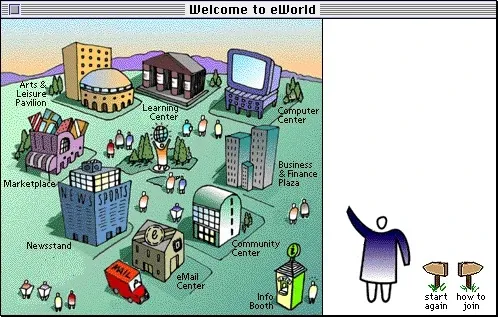
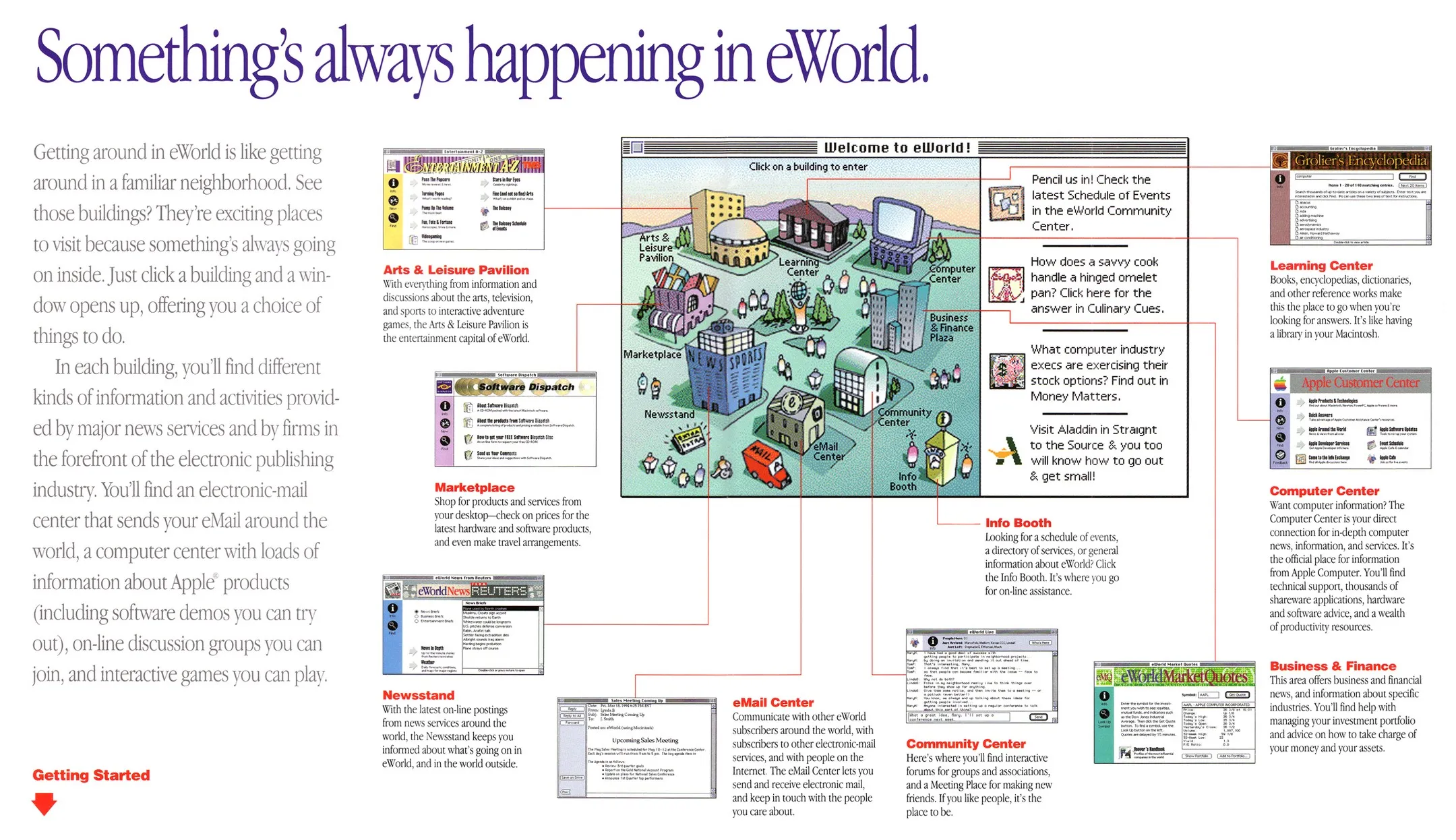
Each subscriber entered a virtual environment that resembled a city—making eWorld feel more like a place than a tool.
Key Features of eWorld
1. The Virtual City Experience
The defining feature of eWorld was its interactive interface. Users navigated through a virtual town where buildings represented services.
- Post Office → Messaging and email center
- Newsstand → Articles and updates
- Community Center → Forums and chat rooms
This design helped eWorld subscribers explore the platform without needing technical knowledge.
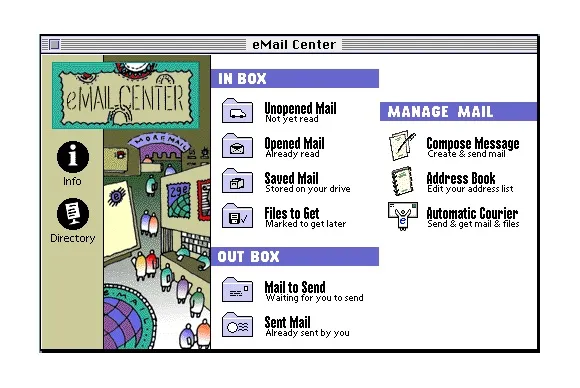
2. Email Center and Messaging
The email center was a core feature of eWorld, allowing each subscriber to:
- Send and receive messages
- Organize communications
- Connect with other eWorld users
At a time when email was still new to many, this made eWorld especially appealing.
3. Community and Chat Rooms
Community interaction was central to eWorld. Users could join discussions, participate in chat rooms, and connect over shared interests—much like modern social platforms.
4. Content and News Integration
eWorld also provided curated content, including:
- News updates
- Software downloads
- Apple announcements
Publications like Macworld often covered developments in eWorld, highlighting its potential as a major digital hub.
5. Limited Internet Access
While eWorld was primarily a closed ecosystem, it offered some gateway access to the broader internet—though far more limited than competitors like AOL or America Online. This was a significant drawback as the open web grew in popularity.
Pricing Structure: A Major Weakness
One of the biggest challenges for eWorld was its pricing model.
- Monthly fee starting at $8.95 for 2 hours of access
- Additional hourly charges were billed at $4.95/hour non peak (6pm-6am) and $7.95/hour during peak hours.
Compared to AOL, which was becoming more affordable, eWorld felt expensive and restrictive. This pricing discouraged many potential subscribers.
How eWorld Compared to AOL and CompuServe
Strengths of eWorld
- Advanced graphical interface
- Seamless integration with Apple devices
- Intuitive navigation for Macintosh users
Weaknesses of eWorld
- Limited to Apple hardware
- Smaller user base than AOL
- Higher costs for subscribers
While AOL and CompuServe expanded rapidly, eWorld remained niche.
Why Apple Shut eWorld Down
By 1996, Apple shut down eWorld after just two years.
1. Limited Audience
Because eWorld only worked on Macintosh systems, it couldn’t compete with cross-platform services like AOL.
2. High Costs
The pricing model made eWorld less attractive than competitors.
3. Rise of the Open Web
The explosive growth of the internet made closed platforms like eWorld less relevant.
4. Internal Apple Challenges
At the time, Apple was struggling with multiple product lines, including the Newton, which also faced challenges in the market. Maintaining eWorld became less of a priority as Apple refocused its strategy.
Legacy of Apple eWorld
Even though eWorld failed, its influence can still be seen today.
1. Early UX Innovation
The visual design of eWorld anticipated modern app interfaces and dashboards.
2. Ecosystem Thinking
As an Apple product, eWorld reflected Apple’s long-term vision of integrated services—a strategy now seen in iCloud and other offerings.
3. Digital Community Design
The concept of virtual spaces within eWorld helped shape how we think about online communities today, such as subreddits.
Lessons from eWorld
1. Innovation Isn’t Enough
Even though eWorld was ahead of its time, it couldn’t overcome pricing and accessibility issues.
2. Timing Is Critical
Launching after AOL and CompuServe meant eWorld had to play catch-up.
3. Open Platforms Win
The open internet ultimately outpaced closed ecosystems like eWorld.
Conclusion
eWorld remains one of Apple’s most interesting experiments—a bold attempt to redefine how people interact online. While Apple shut the service down in 1996, the ideas behind eWorld continue to influence modern technology.
For anyone interested in tech history, eWorld is more than a failed platform—it’s a glimpse into the early vision of a connected digital world.
eWorld FAQs
What was Apple eWorld?
Apple eWorld was a short-lived online service launched by Apple Inc. in June of 1994. eWorld was an online service designed specifically for Mac users, offering email, forums, file downloads, and a graphical interface. The platform was part of a broader push toward centralized online services and improving the early user experience for everyday consumers.
When did Apple announce eWorld?
Apple announced eWorld at the 1994 Macworld event with the official launch following shortly after on June 20. This marked Apple’s formal entry into consumer-focused online services at the time.
What features did the eWorld online service include?
The eWorld online service included two primary hubs: the email center and community center.
- The email center was a virtual center was a virtual post office, often described as a virtual post office, where users managed messages
- The community center acted like an online community with forums, including business-themed discussion boards
- File downloads centered around various categories, much the same way early bulletin board system platforms worked
These features made eWorld feel like a graphical version of an online BBS where thousands of users could interact.
How did eWorld compare to AOL and other services at the time?
eWorld was expensive compared to competitors like AOL, CompuServe, and Prodigy.
- The service cost started at $8.95 per month for 2 hours of access, plus additional hourly fees
- AOL’s pricing model ($9.95/month with 5 hours of access in 1994) became more competitive over time
- CompuServe was $8.95/month in 1994 for unlimited usage
- eWorld was expensive compared to other services, limiting growth
While eWorld offered a better interface, its pricing and limited reach hurt adoption.
Why did Apple shut down eWorld?
The death of eWorld came quickly. Apple shut down eWorld in the march of 1996, with the official end of eWorld occurring on March 31.
Several factors contributed:
- Apple’s management decided that the product was doomed to fail in a market dominated by larger competitors
- The service was only available on Macs
- The eworld project struggled with marketing and promotion
- The rapid rise of the open internet
Ultimately, Apple’s management decided that the product could not compete effectively.
Was there ever a Windows version of eWorld?
A windows version was promised, and Apple even stated that a version was promised to appear in 1995. However, the promised Windows version never materialized, limiting eWorld’s reach.
How much did eWorld cost to use?
The service cost included:
- Base subscription of 8.95 per month
- Additional hourly charges after included usage
The plan included two free hours each month, but beyond that, costs increased quickly—making it expensive compared to other services at the time.
What made eWorld unique compared to other online services?
The software was based around a visual metaphor. The main eWorld portal also functioned like a city:
- The email center was a virtual post office
- The community center was a gathering place for discussions
- Users navigated spaces much the same way they would explore a town
This design approach was considered ahead of its time and helped define future digital interfaces.
What was the role of ePeople in eWorld?
ePeople were community figures within eWorld’s ecosystem who helped guide discussions and foster engagement. They played a role in maintaining the platform’s sense of community and moderating interactions.
Who developed and managed eWorld?
The platform was written by Apple and developed within Apple’s internal online services group. At the time, CEO Michael Spindler oversaw Apple’s direction.
However, after the end of eWorld, the online services group was disbanded, and many members left Apple as the company shifted priorities.